
Predict surgical outcomes for degenerative cervical myelopathy
Our machine learning models, trained on real patient data, help clinicians and patients understand the likely functional outcomes of DCM decompressive surgery and identify which prognostic patient profile best matches their pre-surgical presentation.
Predictive tools
AI tools built with real DCM patient data

Ambulatory mJOA Prediction
Predicts whether ambulatory mJOA score will improve 12 months after decompressive surgery, using pre-surgical clinical data

Patient Clustering
Groups patients into distinct clusters with distinguishable prognostic phenotypes based on pre-surgical clinical characteristics
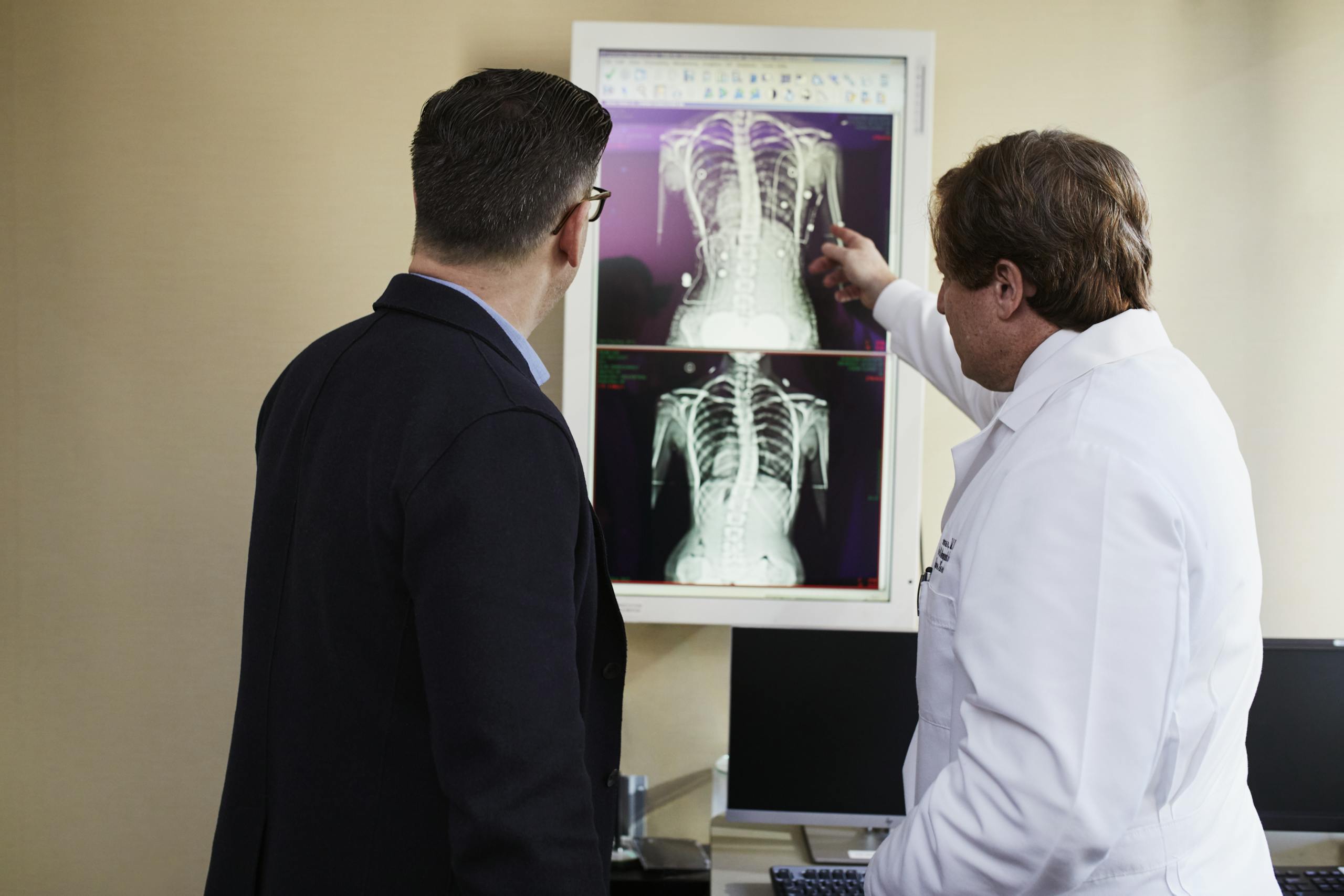
Pre-Surgical Input
Both models use only data available before surgery, making them practical tools for pre-operative shared decision making

Decision Support
Designed to support, not replace, clinical judgment in shared decision making for DCM surgical candidates
our research
Evidence-based tools for spinal surgery decision support.
Our models were developed using prospectively collected data from DCM patients across multiple centres. Both models rely exclusively on pre-surgical variables, ensuring they are practical for use at the point of surgical decision making.
Validated on prospective patient cohorts
Models were developed and validated on real-world DCM patient data collected across multiple clinical sites.
Pre-surgical variables only
All inputs are collected before the operation, making predictions available at the point of surgical consultation.

the research team
The Clinical and Data Science Research Team
This project is a collaboration between spine surgeons and data scientists with expertise in machine learning, orthopedics, and clinical outcomes research.
Dr. Philippe Phan
Associate Professor, Department of Surgery, University of Ottawa
Spine Surgeon, The Ottawa Hospital
Dr. Christopher Sun
Canada Research Chair in Data Analytics, Telfer School of Business
University of Ottawa
Daniel Kurtz
MD-PhD Candidate, Department of Neuroscience
University of Ottawa


Dr. Philippe Phan
Principal Investigator
our approach
Precision tools for better surgical decisions
DCM is the most common cause of spinal cord dysfunction in adults. Despite its prevalence, predicting which patients will benefit most from surgery remains challenging. Our tools aim to reduce uncertainty and support more informed discussions between patients and their surgical team.
our affiliations
Affiliated institutions and funding bodies
This research was made possible through collaboration with the following universities, hospitals, and research funding organizations.



DCM Research
dedicated to improving outcomes for every patient with DCM
Our models
Validated with patient cases from across Canada
Stay up to date with our latest research and model updates
Subscribe to receive notifications about new publications, model improvements, and updates to our DCM prediction tools.
Evidence-based research
Improving care for DCM patients through data science
750+
Patient cases used in model training
Prospectively collected from 10+ clinical sites across Canada, pre-surgery and 12-months post-surgery.

Our tools are designed to translate research into practice: Assisting clinicians & patients in navigating one of the most critical decisions in spinal care.
Both models use exclusively pre-surgical inputs, including patient demographics, symptom severity, imaging findings, and functional scores. Predictions are generated in seconds and presented with model probabilities to aid transparent, evidence-based conversations.
get in touch
Questions about the models or collaboration opportunities?
We welcome enquiries from clinicians, researchers, and institutions interested in using or validating our tools. Whether you have a question about model inputs, want to discuss a collaboration, or are interested in applying these tools to your own patient cohort, we’d love to hear from you.